The First Sitcom: Tracing the Origins of Televised Comedy
Sitcom History Explorer
Explore the key milestones in sitcom history or test your knowledge with our quick quiz.
Key Milestones in Sitcom History
The Goldbergs (Radio)
A radio soap/comedy hybrid begins, establishing the long-running domestic character format that would later influence TV.
Mary Kay and Johnny Premieres
The first true sitcom airs on DuMont. It features a married couple sharing a bed, breaking FCC decency norms of the time.
The Goldbergs Moves to TV
Demonstrates that audiences want consistent characters returning week after week, cementing the series format.
I Love Lucy Premieres
Lucille Ball's show standardizes the multi-camera film technique, enabling high-quality reruns and the modern syndication model.
Introduction of Laugh Tracks
Charles Douglass introduces the Laff Box, changing how home viewers interact with comedic timing.
Test Your Knowledge
You probably picture a laugh track, a studio audience, or maybe I Love Lucy when you think of the first great sitcom. But if we are being strict about definitions, the title of "first sitcom" actually belongs to a show that most people have never heard of, filmed in a tiny New York studio with almost no budget. It wasn't glamorous. It wasn't even recorded on film for posterity in the way modern shows are. So, what was the very first sitcom? The answer is Mary Kay and Johnny, which aired on the DuMont Television Network starting December 18, 1947.
This might sound like a trivial piece of trivia, but understanding where the sitcom started helps us understand why they look and feel the way they do today. The transition from radio to television wasn't just a change in medium; it was a complete reinvention of how jokes were delivered. In this guide, we'll break down exactly what made Mary Kay and Johnny the pioneer, why I Love Lucy often gets mistaken for the first, and how these early experiments shaped the half-hour format we binge-watch now.
The True Pioneer: Mary Kay and Johnny
Mary Kay and Johnny is a domestic situation comedy that aired from 1947 to 1950. Created by and starring real-life married couple Mary Kay Stearns and Johnny Stearns, the show was essentially a televised version of their radio program, The Honeydrews. Before television took off, radio had already perfected the "domestic comedy" format-think The Jack Benny Program or Fibber McGee and Molly. When TV arrived, producers simply tried to port those audio hits to video.
Here is the critical detail that defines its status as the first: it was the first series to depict a married couple sharing a bed on screen. This sounds tame today, but in 1947, it was revolutionary. The FCC (Federal Communications Commission) had strict decency standards, and showing two adults in a bed together-even fully clothed-was a massive risk. The fact that the network allowed it signaled a shift in cultural norms driven by the intimacy of the new medium.
The production values were, to put it mildly, modest. There was no laugh track because the technology didn't exist yet. Instead, the actors relied on timing and the occasional live audience reaction, though many episodes were filmed without one. Because videotape hadn't been invented yet, most episodes were broadcast live and lost forever. Only a handful of kinescopes (films recorded off a TV monitor) survive. This loss makes studying early sitcoms difficult, but it also highlights how disposable television was considered at the time.
Why I Love Lucy Gets the Credit (And Why It's Wrong)
If you ask ten people what the first sitcom was, nine will say I Love Lucy. Premiering in 1951, four years after Mary Kay and Johnny, Lucille Ball's show is undeniably more famous. But fame doesn't equal primacy. I Love Lucy wasn't the first sitcom; it was the first successful multi-camera sitcom shot on film.
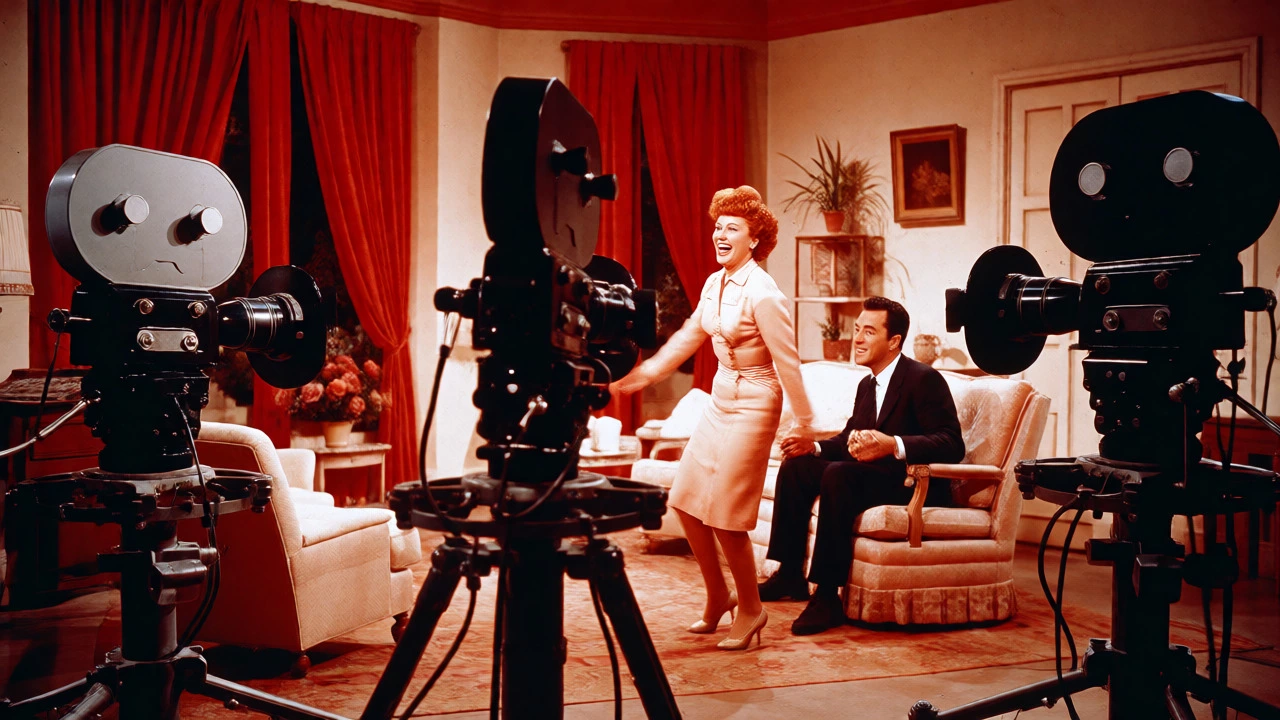
This distinction matters. Mary Kay and Johnny was a single-camera, live broadcast experiment. I Love Lucy utilized three cameras simultaneously, capturing different angles in real-time, and then edited them together. This technique, pioneered by Desi Arnaz and cinematographer Karl Freund, created the visual language of the modern sitcom. The high-quality film stock meant reruns could be sold, creating the syndication model that keeps old shows alive today.
| Feature | Mary Kay and Johnny | I Love Lucy |
|---|---|---|
| Premiere Date | December 18, 1947 | October 15, 1951 |
| Network | DuMont | CBS |
| Format | Single Camera / Live | Multi-Camera / Film |
| Survival Rate | Low (Mostly lost) | High (Complete archive) |
| Legacy | Proved TV comedy worked | Defined the industry standard |
So, while Mary Kay and Johnny broke the ground, I Love Lucy built the house. Without the former, the latter might not have existed, but the latter is the reason the genre survived financially.
The Radio Roots That Shaped TV Comedy
To understand why early sitcoms looked the way they did, you have to look at radio. Most early TV comedies were direct adaptations of radio shows. The Honeymooners, for example, started as sketches on The Jackie Gleason Show, which itself evolved from radio formats. These shows relied heavily on dialogue and sound effects because visual storytelling was still primitive.
This reliance on audio left a mark. Even today, sitcoms prioritize witty banter over visual gags. The structure of a sitcom episode-setup, conflict, resolution-is inherited directly from radio plays. If you've ever noticed that a sitcom feels like a play performed in a living room, that's because it literally started as a radio play. The camera was just a microphone with eyes.
Another key entity here is The Goldbergs, which began as a radio soap opera/comedy hybrid in 1929 before moving to TV in 1949. While technically a drama-comedy blend, it shared the same domestic setting and character-driven humor that defined the sitcom. Its longevity proved that audiences wanted consistent characters returning week after week, a core tenet of the sitcom format.
The Technical Hurdles of Early Broadcasting
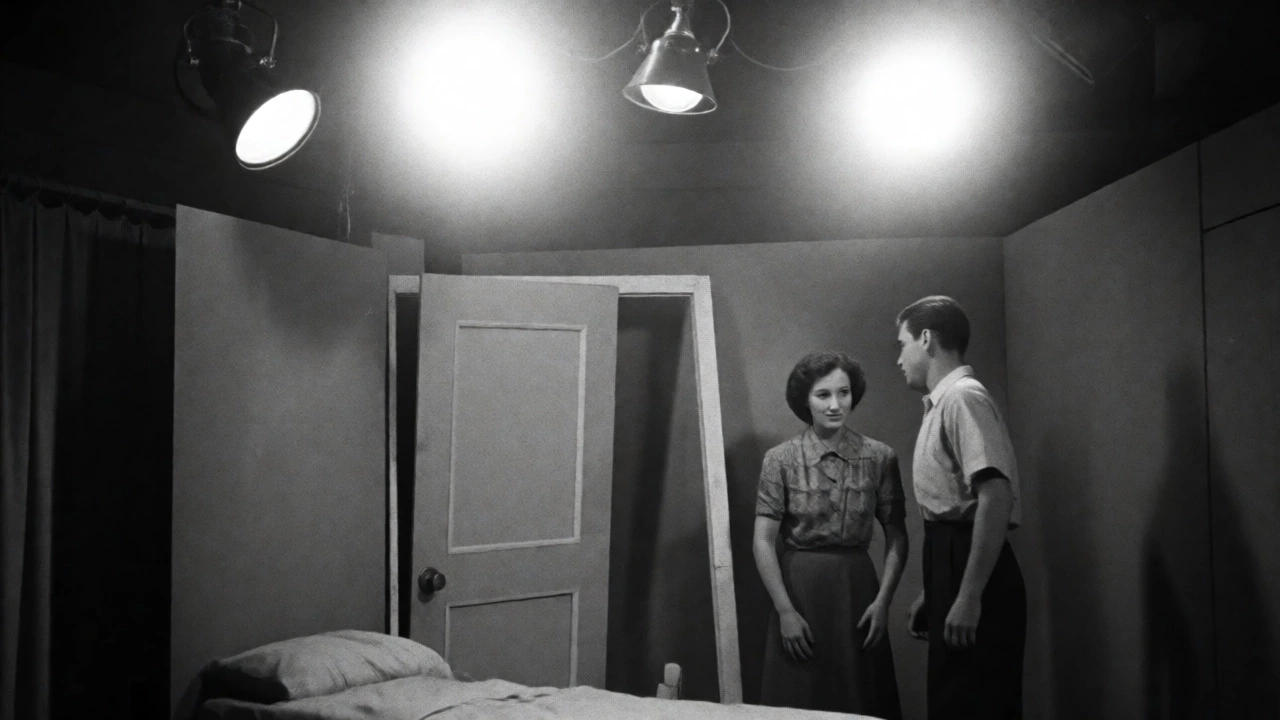
Making a sitcom in the late 1940s was an engineering nightmare. You couldn't edit mistakes out. If an actor tripped over a cable or forgot a line, it happened live, in front of millions of viewers. Mary Kay and Johnny suffered from this. One infamous incident involved a prop door falling off its hinges during a live broadcast. The actors improvised around it, turning a disaster into a joke.
Lighting was another major issue. Early TV cameras were incredibly insensitive to light, requiring blindingly bright studio lights that heated up the set to unbearable temperatures. Actors would sweat profusely, which looked terrible on black-and-white screens. This technical limitation influenced casting choices; performers with shiny skin or heavy makeup struggled, favoring those who could handle the heat.
Then there was the issue of sponsorship. Early TV was entirely sponsored by single advertisers. Mary Kay and Johnny was sponsored by Colgate-Palmolive. This meant commercials weren't breaks between acts; they were woven into the script. Characters would stop mid-conversation to talk about toothpaste. This integration of advertising into the narrative is something modern streaming services are trying to reverse-engineer with product placement, but in the beginning, it was unavoidable.
How the Format Evolved from 1947 to Today
The jump from Mary Kay and Johnny to modern hits like The Office or Abbott Elementary seems huge, but the DNA is identical. Both rely on a fixed cast, a recurring location, and episodic problems that reset by the end of the hour. However, the delivery has changed drastically.
- Laugh Tracks: Added in the 1950s to cue home viewers on when to laugh. By the 2010s, single-camera comedies dropped them entirely, trusting the audience to get the joke.
- Aspect Ratio: Early shows were 4:3 (square). Modern shows are 16:9 (widescreen), allowing for more visual comedy and blocking.
- Serialization: Early sitcoms were strictly episodic. You could watch any episode first. Modern sitcoms often have long-running story arcs, blending sitcom structure with drama serials.
- Diversity: Early sitcoms featured homogeneous casts. Mary Kay and Johnny was white and suburban. Today, shows like Black-ish or Kim's Convenience reflect a much broader demographic reality.
Despite these changes, the core job of a sitcom remains the same: provide comfort through familiarity. We return to these characters because we know them. Mary Kay and Johnny established that contract. They showed us that watching ordinary people deal with minor inconveniences could be entertaining enough to fill our evenings.

Common Misconceptions About TV History
People often confuse "first" with "best" or "most popular." Another common myth is that Fox Movietone News or variety shows were the first scripted content. Variety shows like Texaco Star Theater did air earlier, but they weren't sitcoms. They were vaudeville revues. A sitcom requires a continuous narrative thread and recurring characters in a specific social environment.
Also, don't discount international contributions. While the US dominates the narrative, the UK produced Hancock's Half Hour in 1956, which influenced the global spread of the format. But chronologically, the American experiment led the charge.
Key Takeaways
- Mary Kay and Johnny (1947) is the first true sitcom.
- I Love Lucy (1951) standardized the multi-camera film format.
- Early sitcoms were adapted from radio programs.
- Live broadcasting limitations shaped early comedic timing.
- The genre's core purpose-comfort and familiarity-has remained unchanged since 1947.
Was Mary Kay and Johnny really the first sitcom?
Yes, according to most television historians and the Museum of Broadcast Communications. It premiered on December 18, 1947, on the DuMont Network, predating other known domestic situation comedies.
Why isn't Mary Kay and Johnny well-known today?
Most episodes were broadcast live and not preserved. Videotape wasn't widely used until the late 1950s, so only a few kinescope recordings survive. Additionally, the DuMont Network went bankrupt in 1956, erasing much of its historical footprint.
What is the difference between a sitcom and a sketch show?
A sitcom features recurring characters in a fixed setting with ongoing relationships, whereas a sketch show features unrelated vignettes with different characters each time. Sketch shows like SNL are closer to vaudeville; sitcoms are closer to serialized theater.
Did early sitcoms have laugh tracks?
No. Laugh tracks were introduced later, primarily by Charles Douglass in the 1950s. Early shows like Mary Kay and Johnny relied on natural reactions or silence, as the technology to add artificial laughter didn't exist yet.
How did sponsors influence early sitcoms?
Sponsors owned the airtime. Commercials were integrated directly into the scripts, and characters often endorsed products within the storyline. This limited creative freedom compared to the ad-break model used today.