
What Happens at Parties? Real Talk About Social Gatherings

Ever shown up to a party and felt like you walked into a movie you didn’t audition for? You’re not alone. Parties don’t come with a manual. No one tells you what to say when the music cuts out, or how to escape the person who’s been talking about their dog’s acupuncture for 20 minutes. So what actually happens at parties? It’s not just drinking, dancing, and small talk. It’s a messy, human zoo where people try to connect, hide, perform, or just survive until the snacks run out.
The Arrival: First Impressions and Silent Judgments
The moment you walk in, the party already has a rhythm. People are clustered in groups of three or four, laughing too loud like they’ve known each other for years. You scan the room. Who’s the host? Who’s the quiet one in the corner? Who’s already three drinks in and leaning on the fridge like it’s a best friend? Most people don’t realize how much first impressions matter here. Your outfit? It’s not about looking fancy. It’s about signaling: "I belong here," or at least, "I’m not here to crash." A suit at a backyard BBQ? You’re the odd one. Flip-flops at a rooftop cocktail party? You’re either brave or confused. And the silence? That’s the real test. If you stand near the snack table for more than 90 seconds without saying anything, someone will eventually ask, "Are you a friend of the host?" That’s not small talk. That’s a survival check.The Social Algorithm: Who Talks to Whom
Parties run on unspoken rules. There’s the host, who’s juggling drinks, checking on the music, and pretending they’re not exhausted. Then there’s the anchor - the person everyone drifts back to. They know half the guests, remember birthdays, and can make awkward silences disappear with one joke. You’ll also spot the wallflowers. They’re not shy. They’re just waiting for a signal - a smile, a nod, someone to ask them a real question. Most people don’t ask. They assume wallflowers don’t want to talk. But often, they just want someone to notice them. And then there’s the one-uppers. The person who turns your story about a bad flight into their story about getting stuck in a snowstorm in Iceland for three days with a broken phone and only a granola bar. They’re not trying to be rude. They’re trying to feel seen. But in a party, that kind of energy can drain the room.
The Food and Drink: More Than Just Snacks
The snack table isn’t just for eating. It’s a social tool. People use it as a buffer. If you’re nervous, you can hover there, pick at cheese cubes, and wait for someone to approach. It’s also where conversations start - "Did you try the spicy dip?" or "Who brought this wine? It’s actually good." Drinks are even more telling. The person who sticks to water? They’re either sober, health-conscious, or watching their budget. The one who’s on their third gin and tonic? They’re either celebrating, numbing, or trying to be the life of the party. And the person who refills their glass every five minutes but never seems to sip? That’s the one who’s pretending to be okay. Alcohol doesn’t change who people are. It just removes the filters. That’s why you hear things like, "I hate my job," or "I still think about my ex," or "I’m terrified of being alone forever." Parties are where people drop their masks - not because they want to, but because they’re tired of holding them up.The Dance Floor: Movement Without Words
When the music kicks up, something shifts. People who were stiff and quiet suddenly start moving. Not always well. Some dance like they’re being chased. Others sway like they’re in a meditation app. But it doesn’t matter. Dancing isn’t about skill. It’s about surrender. That’s the magic of the dance floor. No one’s judging your steps. Everyone’s too busy worrying about their own. You might see someone you barely know laughing so hard they’re crying. You might catch someone’s eye and just smile - no words needed. That’s connection without pressure. And then there’s the one person who insists on dancing with everyone. They’re not trying to flirt. They’re trying to feel alive. And sometimes, that’s exactly what the room needs.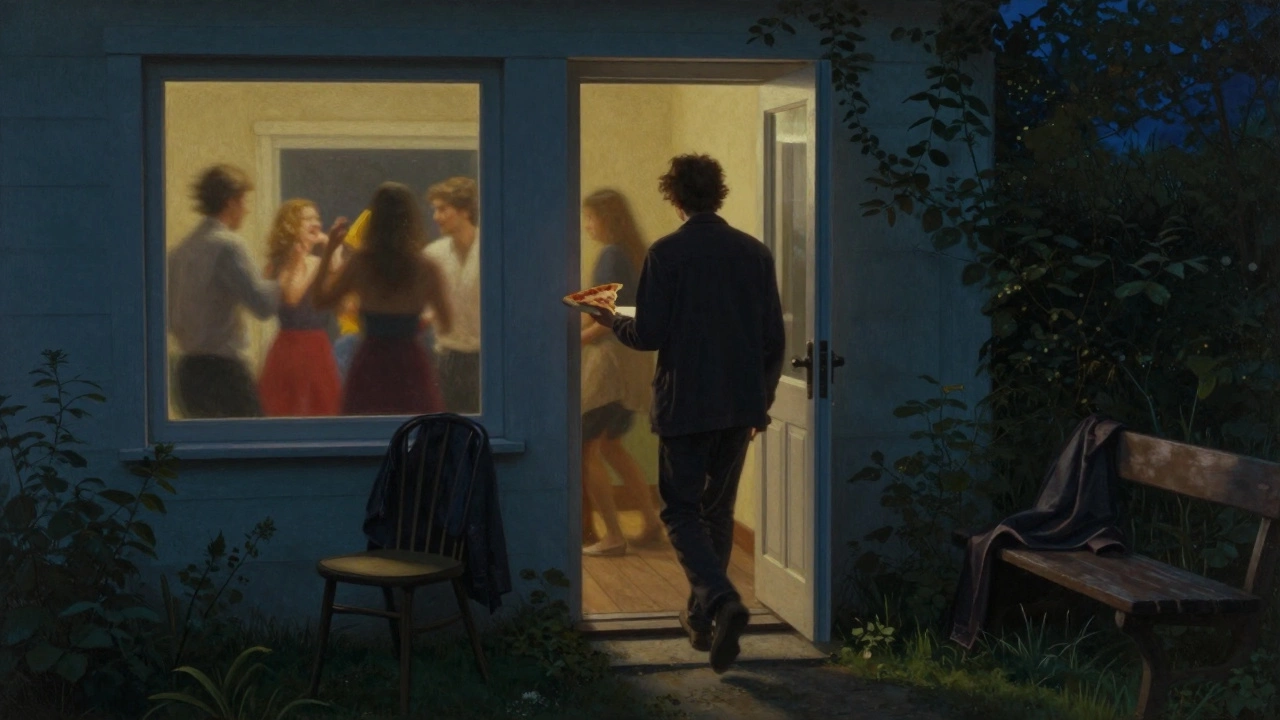
The Exit: When It’s Time to Go
Leaving a party is an art. Too early? You’re rude. Too late? You’re the last one standing, holding a half-eaten slice of pizza, wondering if anyone noticed you were there. Most people leave when the energy dips. The music slows. The host starts cleaning up. Someone says, "I think I’m gonna head out." And suddenly, everyone feels permission to go. The best exits are quiet. A quick hug, a "Thanks for having me," and you’re out the door. No grand speeches. No over-the-top compliments. Just gratitude. And here’s the truth: you don’t have to stay until the end. You don’t have to be the life of the party. You don’t have to dance. You don’t even have to talk to everyone. You just have to show up.Why We Keep Going Back
So why do we keep going to parties? Not because they’re perfect. They’re messy, awkward, sometimes boring, occasionally exhausting. We go because we’re wired to connect. Even in a crowded room, loneliness can still creep in. Parties remind us we’re not alone - even if it’s just for a few hours. You might not remember the name of the person you talked to about their cat’s new diet. But you’ll remember how you laughed. How you felt, for a moment, like you belonged. That’s the real magic of parties. Not the music, not the drinks, not even the food. It’s the quiet moments - the shared glance across the room, the unexpected hug from someone you haven’t seen in years, the stranger who said, "You look like you need this," and handed you a glass of water without asking. You don’t need to be great at parties. You just need to be there.Why do I feel so awkward at parties?
Feeling awkward at parties is normal - even for people who seem totally confident. Most guests are focused on their own nerves, not judging you. Parties are social minefields: too many people, too little structure, and zero instructions. The key isn’t to be perfect - it’s to accept that awkwardness is part of the experience. Try focusing on one person, ask a simple question like "How do you know the host?" and listen more than you speak. You’ll be surprised how much easier it gets.
What should I bring to a party?
If it’s a casual gathering, a bottle of wine, a six-pack of craft beer, or a dessert you made yourself works well. For potlucks, bring something that can be easily shared - like a tray of appetizers or a big bowl of salad. Don’t overthink it. The host cares more that you showed up than what you brought. If you’re unsure, just ask: "Is there anything you need help with?" That’s often more appreciated than a gift.
How long should I stay at a party?
There’s no hard rule, but a good guideline is to stay for at least an hour - enough time to say hello, have a real conversation, and enjoy the atmosphere. If it’s a dinner party, stay until dessert. For a casual get-together, staying two to three hours is usually fine. If you need to leave early, say so politely: "I’ve got an early start tomorrow, but I really enjoyed being here." Most hosts will understand.
What if I don’t know anyone at the party?
It’s more common than you think. Start by finding the host - they’ll usually be the one trying to make sure everyone’s okay. Ask them, "Who’s your favorite person here?" or "How did you meet most of these people?" That opens the door to introductions. If you’re still stuck, head to the snack table or the music area. People are more open when they’re distracted. A simple "This song is stuck in my head" can start a conversation.
Are parties good for introverts?
Yes - if you set your own terms. Introverts don’t need to be the center of attention to enjoy parties. You can thrive by having one or two meaningful conversations instead of trying to talk to everyone. Bring a book or a playlist to help you recharge if you need a break. Stepping outside for five minutes, or finding a quiet corner to sit, is perfectly okay. The goal isn’t to perform - it’s to feel connected, even if just for a little while.