
How to Beat an Escape Room: Pro Tips and Strategies
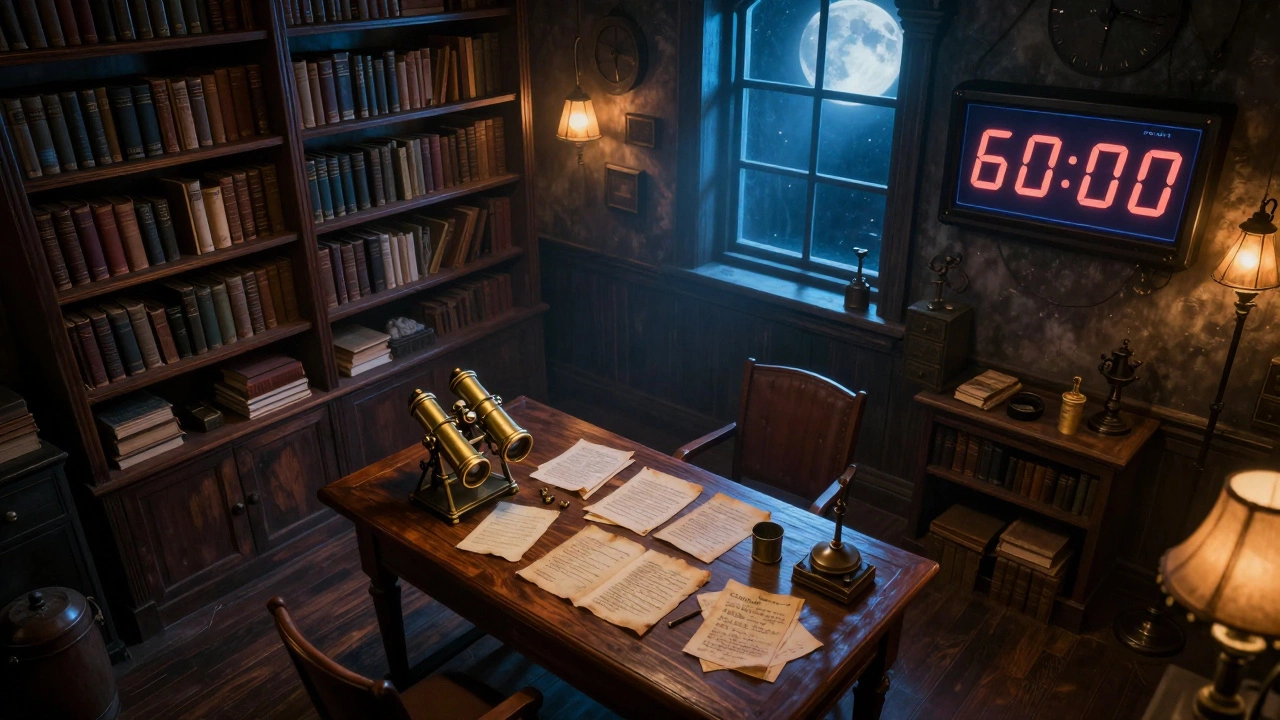
Escape Room Readiness Simulator
TEAM TRAINING MODEClick objects to search for clues. Be careful not to fall into 'Rabbit Holes'!
If you want to stop seeing the 'Game Over' screen and actually feel that rush of victory, you need a system. Whether you're a total newbie or someone who has done a few but always falls short by five minutes, the secret lies in a mix of observation, communication, and a bit of psychological discipline.
Quick Win Checklist
- Search everything: Look under rugs, behind books, and inside pockets.
- Communicate out loud: If you find a key, shout it out. Don't keep it a secret.
- Organize your finds: Create a 'discard pile' for used clues.
- Don't overthink: Most puzzles are simpler than you think they are.
- Ask for hints: Waiting too long for a 'eureka' moment is the fastest way to lose.
The First Five Minutes: The Search Phase
The biggest mistake teams make is trying to solve puzzles before they've actually found the pieces. You can't solve a jigsaw puzzle if half the pieces are still in the box. When the clock starts, don't look for the 'answer'-look for stuff. Escape Rooms are immersive physical adventures where players solve a series of puzzles to unlock a door or achieve a goal. In these environments, every object is either a clue, a tool, or a red herring.
Split your team up. One person should check the walls, another the furniture, and another the floor. If you find a weirdly placed book or a drawer that opens just an inch, pull it out. Reach behind the curtains. Check the underside of tables. Many rooms use magnetic triggers or hidden compartments that only reveal themselves when you physically interact with the environment.
As you find things, bring them to a central location. If you find a blue key and a blue lock, you've got a match. If you find a scrap of paper with a series of numbers, put it on a table where everyone can see it. This prevents the 'I found this ten minutes ago' moment, which is the ultimate mood-killer in a high-pressure game.
Cracking the Code: Common Puzzle Types
You don't need to be a cryptographer to win. Most rooms rely on a few core logic patterns. Once you recognize these, you can solve them in seconds. Pattern Recognition is the primary skill used here, where you match a visual cue to a physical lock.
One of the most common is the 'Environmental Clue.' This is when the answer is written on the wall, but it's hidden in plain sight. Maybe there are five paintings, and each one has a different number of flowers. Count them. That's your code. Another frequent flyer is the 'Physical Interaction' puzzle, where you have to place objects in a specific order or rotate a dial to a certain degree.
Then there are the locks. You'll likely encounter Combination Locks, which are locks that require a specific sequence of numbers or letters to open. If you find a 4-digit lock, look for a 4-digit sequence. Don't try to guess a 4-digit code using a 3-digit clue-it simply won't work. Similarly, if you see a Directional Lock, look for arrows, footprints, or instructions like 'Up, Down, Left, Right'.
| Lock Type | What to Look For | Common Pitfall |
|---|---|---|
| Number Pad/Dial | Dates, counts of objects, math problems | Trying a code that has too many/few digits |
| Key Lock | Hidden keys, magnets, puzzle boxes | Using the wrong key for the wrong door |
| Directional Lock | Arrows, compass points, movement maps | Mixing up clockwise and counter-clockwise |
| Word/Letter Lock | Missing letters in a text, highlighted alphabet | Misspelling the target word |
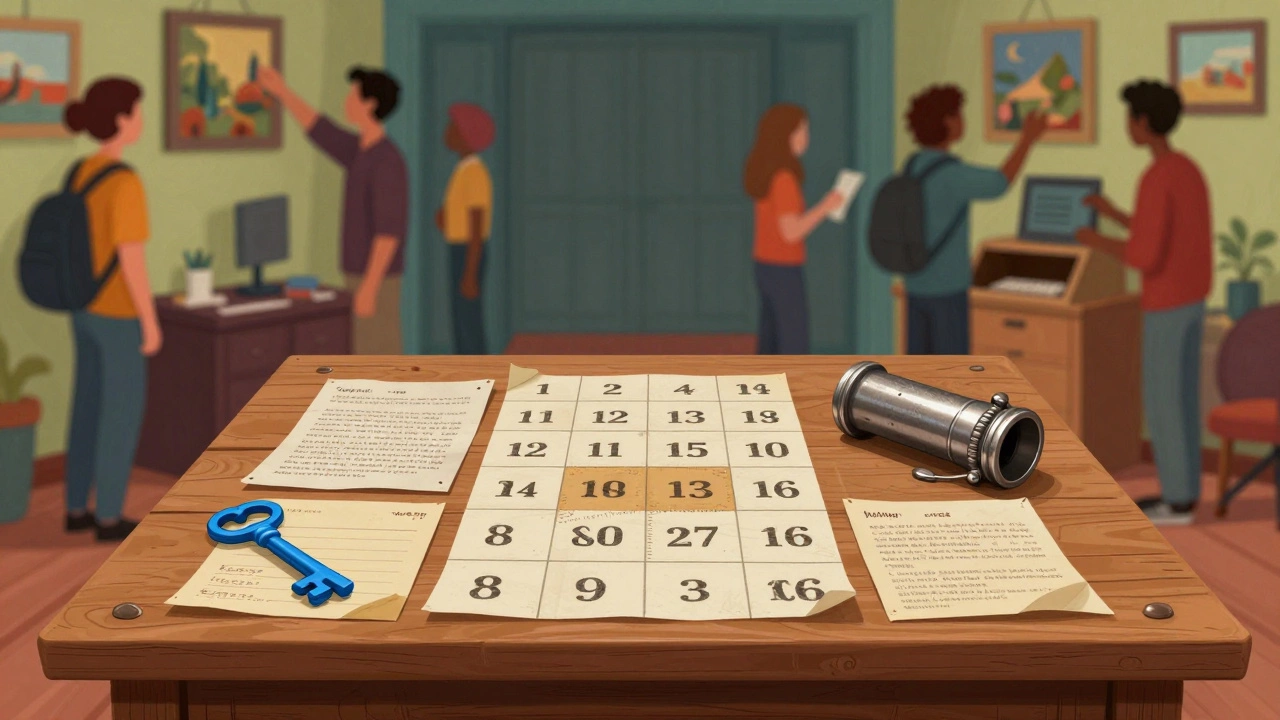
Mastering the Art of Teamwork
You might be the smartest person in the room, but if you're the only one solving the puzzles, your team will fail. Escape room strategies rely heavily on collective intelligence. This isn't a competition between teammates; it's a battle against the clock. The moment you find something, describe it. 'I found a piece of paper with the words RED, BLUE, GREEN!'
This allows someone else who might be looking at a series of colored buttons to realize, 'Wait, I have the buttons! Put the paper here!' This is called cross-referencing. If everyone stays in their own little bubble, you'll miss the connections that tie the room together.
Assign roles if your team is struggling. Have one 'Logistics Manager' who keeps track of all the keys and papers, and a 'Searcher' who focuses on the physical environment. Most importantly, designate a 'Hint Master'. This person is the only one authorized to ask the Game Master for a clue. This prevents five different people from asking for hints at once and keeps the communication line clean.
The Psychological Game: Avoiding the Rabbit Hole
There is a phenomenon in these games called 'The Rabbit Hole.' This happens when a team spends fifteen minutes trying to solve a puzzle that isn't actually a puzzle. You might see a pattern in the wallpaper and spend ages trying to decode it, only to find out it's just wallpaper.
A good rule of thumb: if you've been staring at something for more than five minutes and haven't made a single shred of progress, walk away. Your brain gets stuck in a loop. When you step back and look at the room with fresh eyes, the answer often jumps out at you. This is essentially the 'rubber ducking' method used by programmers-explaining the problem to someone else often reveals the solution.
Also, be wary of 'over-solving.' In many high-quality rooms, once a puzzle is solved and a lock is opened, that clue is dead. You don't need to use that same piece of paper again. If you find yourself trying to apply an old clue to a new lock, stop. Look for a new piece of information.
When to Call for Help
Pride is the enemy of the escape room. Many teams refuse to ask for hints because they want the 'pure' victory. But here's the truth: getting stuck for twenty minutes on one puzzle isn't fun; it's frustrating. A well-placed hint keeps the momentum going and allows you to see the rest of the game's design.
If you're completely stalled, ask the Game Master for a 'nudge.' A nudge isn't the answer; it's a suggestion of where to look. This keeps the challenge intact while preventing the game from grinding to a halt. Remember, the goal is to experience the whole story and all the puzzles, not to stare at a blank wall for an hour.
Final Checklist for Victory
- The Sweep: Did we check every corner, including the ceiling and under the furniture?
- The Inventory: Do we have a pile of everything we've found?
- The Match: Does the number of digits in the clue match the number of slots in the lock?
- The Communication: Is everyone talking, or is someone working in silence?
- The Pivot: Have we spent more than 5 minutes on this without a lead? If yes, switch puzzles.
What should I do if I'm the only one who knows how to solve puzzles?
Instead of doing it all yourself, act as the coordinator. Describe what you see and ask your teammates for their input. Say things like, 'I think these numbers relate to those books, what do you think?' This keeps the team engaged and prevents them from feeling useless, which actually improves the overall energy and success rate of the group.
Do I need to be good at math to beat an escape room?
Not at all. Most escape rooms use basic arithmetic (addition, subtraction, multiplication) or simple logic patterns. You're more likely to need a keen eye for detail and a sense of curiosity than advanced calculus. If there is a math puzzle, it's usually designed to be solved by a group collaborating together.
How do I deal with a teammate who is panicking or taking over?
The best way to handle a 'steamroller' teammate is to give them a specific job. Ask them to be the one to hold the clues or the one to communicate with the Game Master. For someone panicking, encourage them to help with the 'Search Phase'-giving them a physical task like looking under the table can help ground them and focus their energy.
Are there any tools I should bring with me?
Generally, no. Most rooms forbid outside tools to prevent cheating. However, wearing comfortable clothes and shoes you can move in is a huge advantage. If the room requires you to crawl or bend, a tight pair of jeans or high heels will only slow you down and distract you from the puzzles.
What is the most common mistake beginners make?
The 'Silo Effect'-where one person finds a clue and keeps it in their hand or pocket without telling anyone. This leads to hours of wasted time searching for something that has already been found. Always announce your discoveries immediately to the rest of the team.