
How to Ace an Escape Room: Pro Tips for Solving Puzzles Faster
Escape Room Pattern Finder
Escape rooms aren’t just about locking doors and finding hidden keys. They’re about thinking under pressure, working with your team, and spotting patterns no one else sees. If you’ve ever walked out of an escape room frustrated because you missed the obvious clue, you’re not alone. Most teams fail not because the puzzles are too hard, but because they don’t know how to play the game right.
Start with the room, not the clock
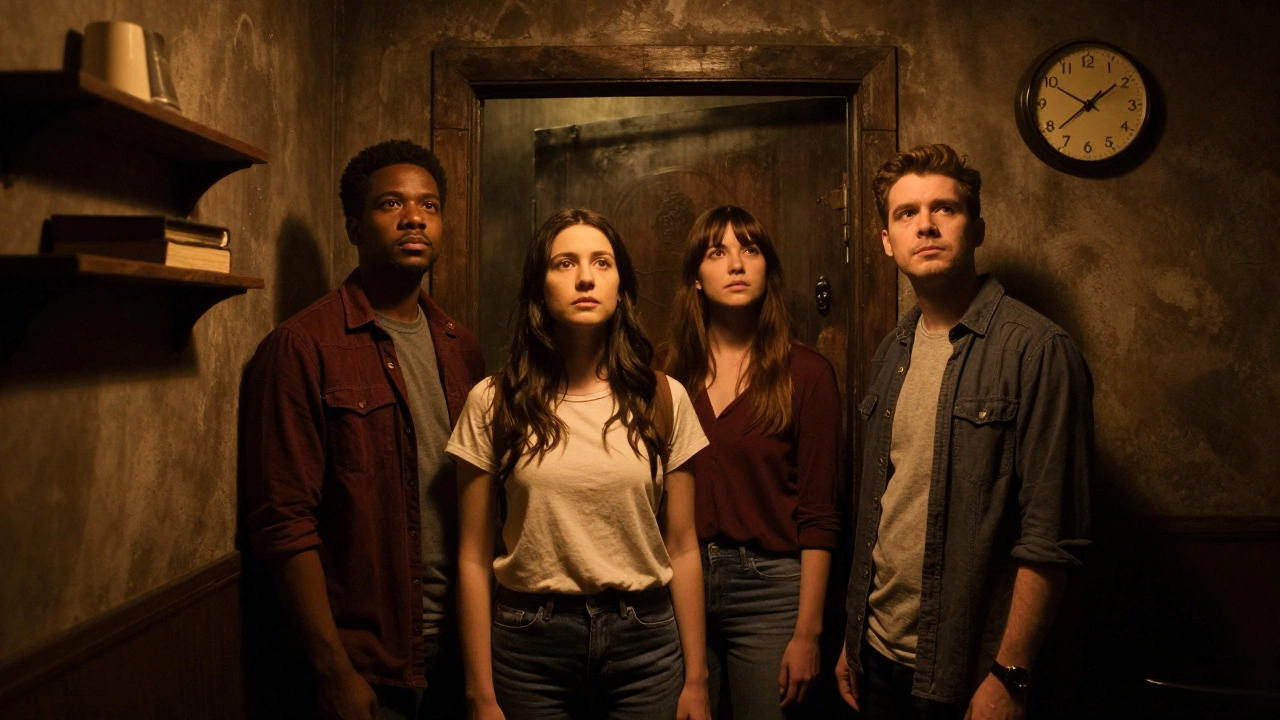
When you first walk in, resist the urge to rush. Take 10 seconds to look around. Don’t touch anything yet. Just scan. What’s out of place? A painting tilted just a little? A book with no spine? A clock that doesn’t tick? These are your first clues. Most escape rooms hide the first key object in plain sight - you just have to notice it. Teams that dive straight into searching behind furniture almost always waste time. The best teams start by mapping the room mentally.
Assign roles - don’t just grab a key and run
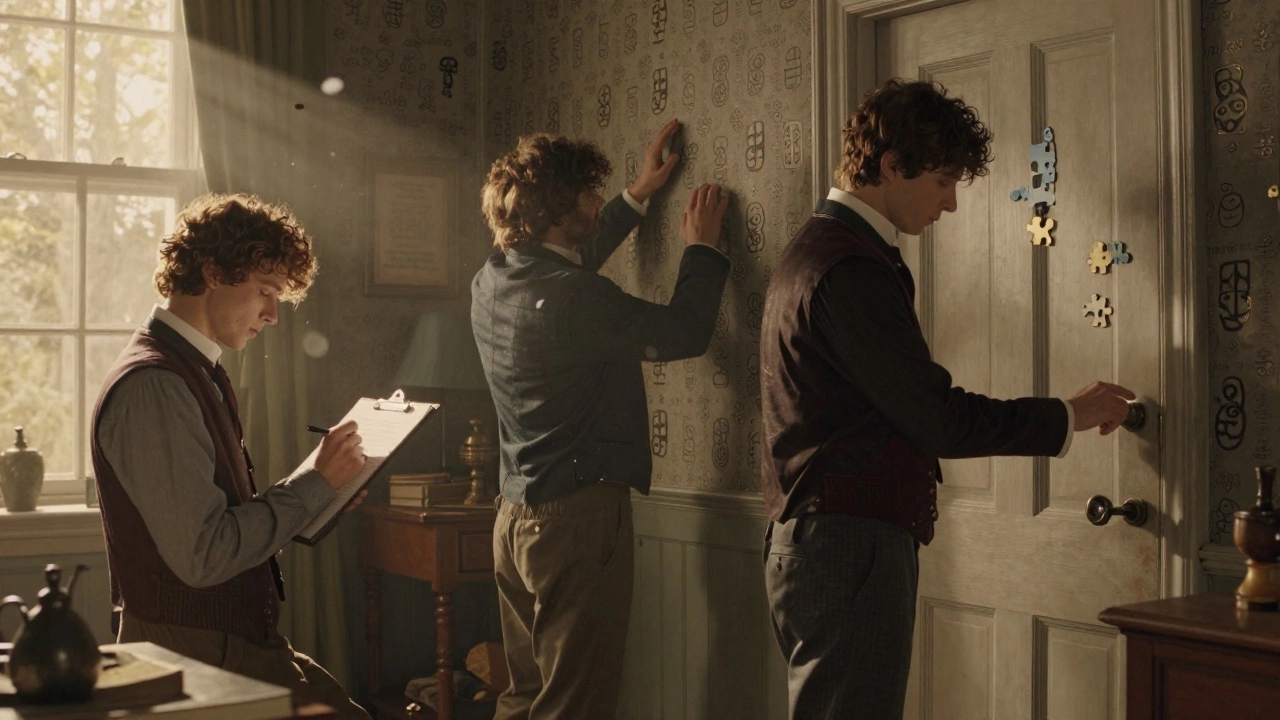
There’s no such thing as a solo escape. Even if you’re the smartest person in the room, you can’t do everything. Split up roles before the timer starts. One person should be the note-taker - writing down numbers, symbols, or codes. Another should be the pattern hunter - looking for repeating themes (colors, numbers, music). A third should be the door checker - constantly testing if anything new opens after a clue is solved. The rest can search. This keeps everyone busy without chaos. Teams that don’t assign roles end up with three people staring at the same lock while two others are bored.
Communicate like a team, not a crowd
Don’t yell. Don’t shout random guesses. Say: "I found a key with a number 7 on it - is that connected to the 7 locked drawers?" That’s specific. Vague statements like "I think something’s wrong with this wall" don’t help. Good teams use a simple system: "I found X. I think it might relate to Y. I need help with Z." This tells people exactly what you’ve done and where you’re stuck. If you’re stuck, say so. Most puzzles unlock only after two or three clues are combined. One person holding a number and another holding a symbol might not realize they need each other unless they talk.
Look for patterns - not just objects
Escape rooms love themes. If it’s a pirate ship, everything connects to the sea. If it’s a mad scientist’s lab, everything has a chemical or medical angle. Look for recurring symbols, colors, or sounds. A musical puzzle? Check if the notes match a tune you heard earlier. A calendar puzzle? Look for dates on old newspapers or photos. The answer isn’t always hidden in a box. Sometimes it’s in the wallpaper, the floor tiles, or the way the light hits the ceiling. One team in Sydney solved a 1920s bank heist room by noticing the shadows on the wall formed a hidden number sequence - no one thought to look up.
Don’t ignore the obvious
The most common mistake? Overcomplicating. If a key is stuck in a lock and you’ve tried every combination, maybe the key is the clue. Maybe the lock doesn’t need a number - maybe it needs a shape. Or maybe the key isn’t meant to open the lock - maybe it’s a symbol that matches another object in the room. Escape room designers know you’ll overthink. That’s why they put the answer right in front of you. A red button? Maybe it’s just a button. A book with a torn page? Maybe the missing page is in your pocket. The simplest solution is often the right one.
Use time wisely - not just for solving
Most teams panic when they hit 10 minutes left. That’s when they start smashing things. Don’t. At the 15-minute mark, pause. Look at what you’ve solved. What’s left? If you’ve opened three locks but still have one door shut, go back to the first clue. Did you miss something? Did you assume a clue was used when it wasn’t? Teams that pause and review what they’ve done in the last 10 minutes are 40% more likely to escape. The clock isn’t your enemy - it’s your guide. Use it to check your progress, not to freak out.
Practice the mental reset
When you hit a wall, don’t stare harder. Walk away. Literally. Step back from the puzzle. Look at the ceiling. Check the door again. Talk to your teammate about something totally unrelated. This resets your brain. Studies show that stepping away from a problem for even 30 seconds improves problem-solving by up to 60%. One team in Melbourne solved a complex cipher after one person went to the bathroom. They came back and said, "I just realized the numbers match my phone number." Sometimes your brain needs space to connect dots.
What to do if you’re stuck
Most escape rooms give one or two hints. Use them wisely. Don’t ask for a hint the second you get stuck. Wait until you’ve tried everything. Then ask for the smallest hint possible. "Can you tell me if this number is part of the code?" is better than "What do I do next?" The best hint isn’t the answer - it’s the nudge that makes you think differently. If you get a hint, don’t just follow it. Ask: "Why is this important?" That’s how you learn.
What separates good teams from great ones
Great teams don’t just solve puzzles. They notice the story. Why is this room set up this way? Who lived here? What happened before you arrived? The best escape rooms hide narrative clues in the details. A diary entry. A faded photo. A broken toy. These aren’t decoration. They’re part of the puzzle. Teams that treat escape rooms like detective stories win. They don’t just look for keys - they look for motives.
Final tip: Play the same room twice
Yes, really. If you escape, go back. If you fail, go back. The second time, you’ll see everything differently. You’ll notice the clue you ignored. You’ll understand the puzzle structure. You’ll work faster. And you’ll start seeing patterns that make you better at all escape rooms. It’s like learning chess - you don’t just memorize moves. You learn how the board thinks.
Can you beat an escape room alone?
Technically, yes - some rooms allow solo players. But you’ll struggle. Escape rooms are designed for teamwork. A single person can’t search, solve, and communicate all at once. You’ll miss clues, forget combinations, and burn out. Even expert solvers say playing with at least two others doubles your chances of escaping.
Are escape rooms harder now than they used to be?
Yes, and for good reason. Since 2020, escape room designers have raised the bar. Puzzles now combine physical, digital, and narrative elements. A single room might have a QR code that unlocks a sound file, which leads to a color code, which opens a lock tied to a historical event. The days of simple padlocks are gone. The average escape room today has 5-8 distinct puzzle types, up from 2-3 a decade ago.
Do I need to be smart to win?
No. You need to be observant. Some of the best escape room solvers I’ve seen weren’t geniuses - they were quiet, patient, and good at listening. One person noticed a pattern in the wallpaper. Another remembered a line from a poem they’d read years ago. Intelligence helps, but attention to detail and calm thinking matter more.
What’s the most common mistake first-timers make?
They assume every object has a purpose. In reality, about 30% of items in a room are red herrings - there to distract you. The best teams ignore things that don’t fit the theme. If you’re in a space station and you find a teapot, it’s probably not important. Focus on what makes sense in context.
How long should an escape room take to solve?
Most are designed to be solved in 60 minutes. The average successful team finishes in 45-55 minutes. If you’re taking longer than 55 minutes, you’re likely missing communication or pattern recognition. If you’re finishing under 30 minutes, you’re either very lucky or you’ve played that room before. The best rooms are balanced - hard enough to challenge, but fair enough to beat with teamwork.