
Escape Room Group Size Guide: How Many People to Invite
Escape Room Group Size Optimizer
Answer these questions to determine the optimal headcount for your next adventure.
Recommended Group Size
4 PlayersWhy this size?
This recommendation balances collaboration with space constraints.
Tips for Success:
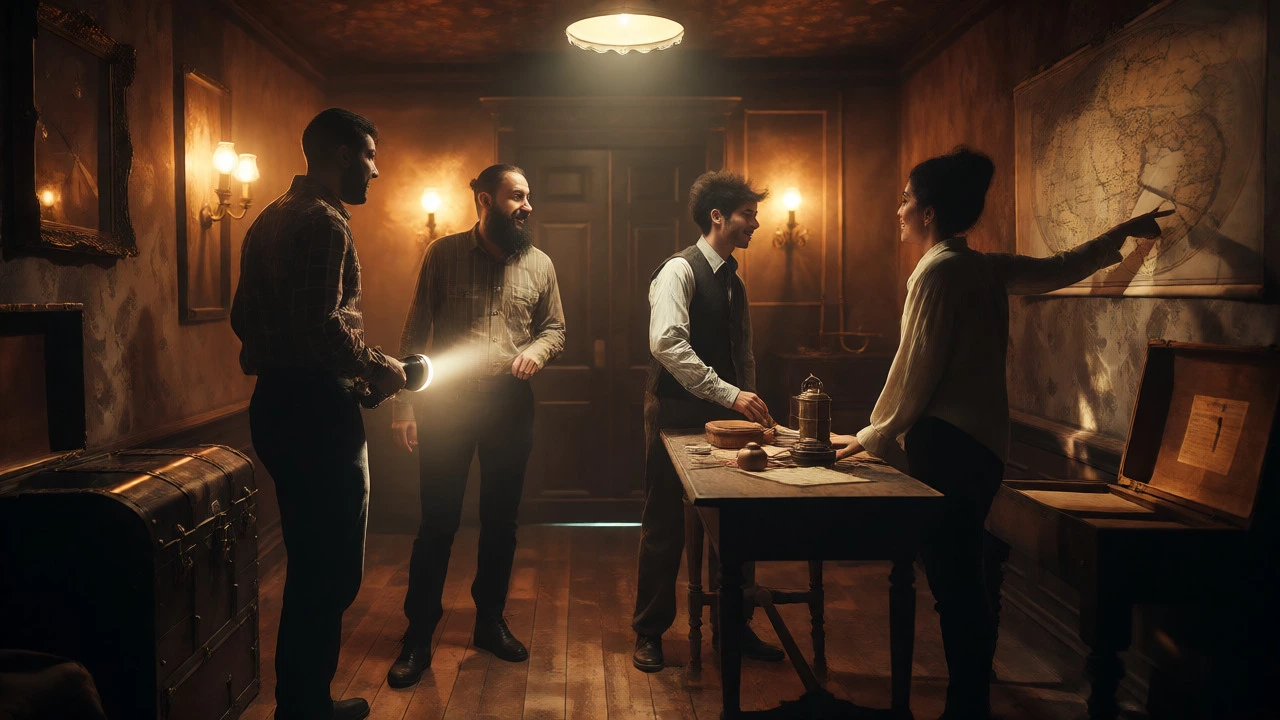
You booked the tickets. You picked the theme. But then the panic sets in: how many people should you go to an escape room with? It’s not just about filling seats; it’s about balancing brainpower against elbow room. Too few friends, and you’ll stare at a locked door for twenty minutes wondering if the clue is on your forehead. Too many, and you’ll spend the hour waiting for someone else to move a box while you stand in a corner holding a flashlight nobody asked for.
The truth? There is no single magic number, but there is a sweet spot for almost every scenario. Most venues design their rooms for groups of 4 to 6 players. Why? Because that’s where collaboration beats chaos. But if you’re bringing your entire office department or trying to impress a date, the math changes completely. Let’s break down exactly who you need, why, and when you might actually want fewer (or more) people than the website suggests.
The Golden Ratio: Why 4-6 Players Usually Wins
If you’re asking what the industry standard is, look at the capacity limits listed on most booking sites. They rarely allow more than 8 adults in a standard-sized room. This isn’t arbitrary greed; it’s spatial physics. An average escape room is roughly 300 to 500 square feet. Once you exceed six people, you hit diminishing returns fast.
With four to six players, you have enough diverse skill sets to cover all bases-logic puzzles, physical dexterity, observation, and communication-without everyone talking over each other. Think of it like a jazz quartet versus a stadium rock band. The quartet can improvise and listen; the band needs a conductor. In an escape room, you are both the musicians and the conductor.
| Group Size | Best For | Risk Factor | Pacing |
|---|---|---|---|
| 2 Players | Couples, intense focus, speed runs | Burnout if one person gets stuck | Fast but fragile |
| 4 Players | Friends, balanced teams, first-timers | Low risk, high cohesion | Steady and collaborative |
| 6 Players | Large friend groups, corporate teams | Chaos if leadership fails | High energy, potential bottlenecks |
| 8+ Players | Family reunions, extreme challenges | Exclusion of quieter members | Chaotic unless highly structured |
The Risks of Going Too Small (1-3 Players)
Can you do an escape room alone? Yes, some venues offer solo experiences, but they are rare and usually cheaper because you’re paying for empty space. Two-player rooms exist, often designed specifically for couples or close friends who thrive on silent coordination. But here’s the catch: if you get stuck on a puzzle, there is no third perspective to save you. You become dependent entirely on your partner’s ability to see what you missed.
Three players is often the awkward middle child. It’s too big for intimate whispering but too small to split into effective sub-teams. If one person dominates the conversation, the other two become spectators. If you’re planning a double date, three people means someone is always left out of the action. Unless you have a very specific dynamic where one person leads and two support, aim for four.
The Dangers of Oversized Groups (7+ Players)
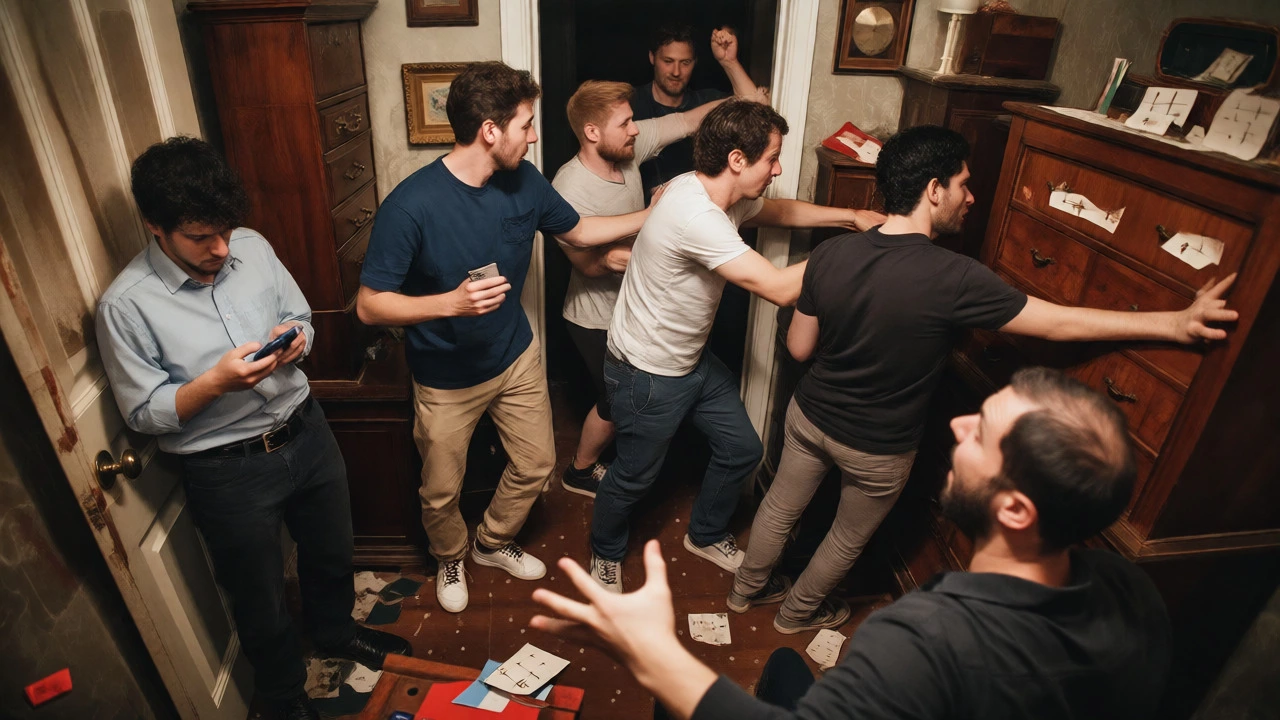
We’ve all been in that room. Eight people enter. Six immediately start grabbing objects. One stands near the door checking their phone. One tries to lead but gets ignored. By minute ten, the noise level is unbearable, and nobody has solved the first lock.
When you bring seven or more people to a standard room, you trigger "social loafing." This is a psychological phenomenon where individuals exert less effort when working in a group than when working alone. Why bother solving the riddle if Dave will probably figure it out? Plus, physical crowding becomes a real issue. If two people need to turn a valve simultaneously, but three others are standing behind them looking at a map, you create a traffic jam. Nobody moves, time ticks away, and frustration mounts.
However, large groups work if you choose the right venue. Some modern escape rooms are built as multi-room complexes or feature massive sets (like a full-scale submarine or mansion) designed specifically for 10-12 players. Always check the square footage or the max capacity before assuming a bigger group is better.
Matching Group Size to Your Goal
Your ideal headcount depends entirely on what you want to get out of the experience. Are you there to win? To bond? Or to laugh at your friends’ mistakes?
- For Competitive Teams: Go with 4. Speedrunning communities generally agree that four is the maximum efficient unit. Everyone has a role. Communication is tight. If you want to beat the clock, smaller is faster.
- For Corporate Team Building: Aim for 5-6. This allows for natural hierarchy shifts. Often, the quietest employee solves the hardest puzzle, while the loudest manager organizes the flow. It reveals personality traits without forcing a formal workshop setting.
- For Family Fun: Mixed ages matter more than numbers. A family of five works well if the kids are old enough to read clues (usually 10+). If you have toddlers, stick to 4 adults so you can carry children without losing momentum.
- For Date Night: Stick to 2. Escape rooms can be stressful. If you’re trying to woo someone, you don’t want the pressure of a crowd. A two-person room forces interaction and shared victory without the distraction of friends making jokes.

How Venue Design Changes the Math
Not all escape rooms are created equal. Before you invite anyone, look at the description of the game itself. Is it labeled "Intense," "Horror," or "Puzzle-Heavy"?
Horror rooms often benefit from larger groups (6-8). Fear is contagious, and having more people creates a safety net that lets shy participants engage more boldly. Conversely, intricate logic-heavy rooms (think cryptography or ancient Egypt themes) often play better with smaller groups (3-4). Complex puzzles require deep concentration. If eight people are shouting theories about hieroglyphics, nobody can think straight.
Also, consider the layout. Linear rooms (where you solve Puzzle A to unlock Door B) favor smaller teams. Non-linear rooms (where you can work on multiple puzzles simultaneously across different zones) favor larger teams. If the room has distinct areas-a library, a kitchen, a basement-six people can split up and tackle three puzzles at once. That efficiency drops off sharply after six.
Practical Tips for Managing Your Team
No matter the size, poor management ruins the fun. Here is how to keep your group cohesive regardless of headcount.
- Appoint a Coordinator, Not a Boss: In groups of 5+, designate someone to track time and organize clues. This person doesn’t solve puzzles; they ensure everyone shares information. "Hey, I found a key, does anyone need it?" prevents duplicate work.
- Establish a 'No Phone' Zone: Even if you’re allowed to take photos, phones distract. With larger groups, people retreat into screens when bored. Keep devices pocketed until the debrief.
- Rotate Roles: If you have a large group, rotate who holds the flashlight or who enters tight spaces. This keeps engagement high and prevents fatigue.
- Debrief Immediately: After the game, sit down together. Larger groups need this closure. Discuss what worked and what didn’t. It turns a chaotic hour into a shared memory rather than a disjointed event.
Remember, the goal isn’t just to escape; it’s to enjoy the process with the people you chose. Choosing the right number is the first step in ensuring that choice pays off.
Is it better to have a smaller or larger group for beginners?
For complete beginners, a group of 3 to 4 is ideal. It provides enough support to overcome confusion without overwhelming new players with too many competing opinions. Larger groups can intimidate first-timers, while solo or duo play can feel isolating if you get stuck early on.
Can I add extra people after booking my escape room?
Usually, yes, provided you haven't exceeded the room's maximum capacity. However, you must contact the venue in advance. Walk-ins are risky because they may disrupt the balance of the game or violate fire codes if the room is already near its limit. Always confirm availability before adding heads.
Do escape rooms cost more for larger groups?
Most venues charge per person, so a larger group costs more total money. However, the price per player often decreases slightly for larger bookings due to volume discounts. Check the pricing structure; some places offer a flat rate for private bookings up to a certain number, which can make inviting more friends cheaper per head.
What happens if we are too many people for the room?
If you exceed the recommended capacity, the game master may ask some players to wait outside or reduce the group size. Overcrowding makes it physically difficult to interact with props and increases the chance of accidentally breaking delicate mechanisms. Venues prioritize safety and gameplay integrity, so they strictly enforce these limits.
Are escape rooms good for introverts?
Yes, especially in smaller groups (2-4 people). Introverts often excel at observation and detailed analysis, which are crucial skills in escape rooms. Avoid large, noisy groups where social anxiety might prevent you from speaking up. Choose a puzzle-focused room rather than a horror-themed one to minimize stress.